More edible and easily transportable food is wasted every year than it would take to end world hunger
Laws, not logistics, keep food from the hungry.
>1 billion tons
of food discarded annually
828 million
people face chronic hunger or food insecurity
Much of it is safe and edible
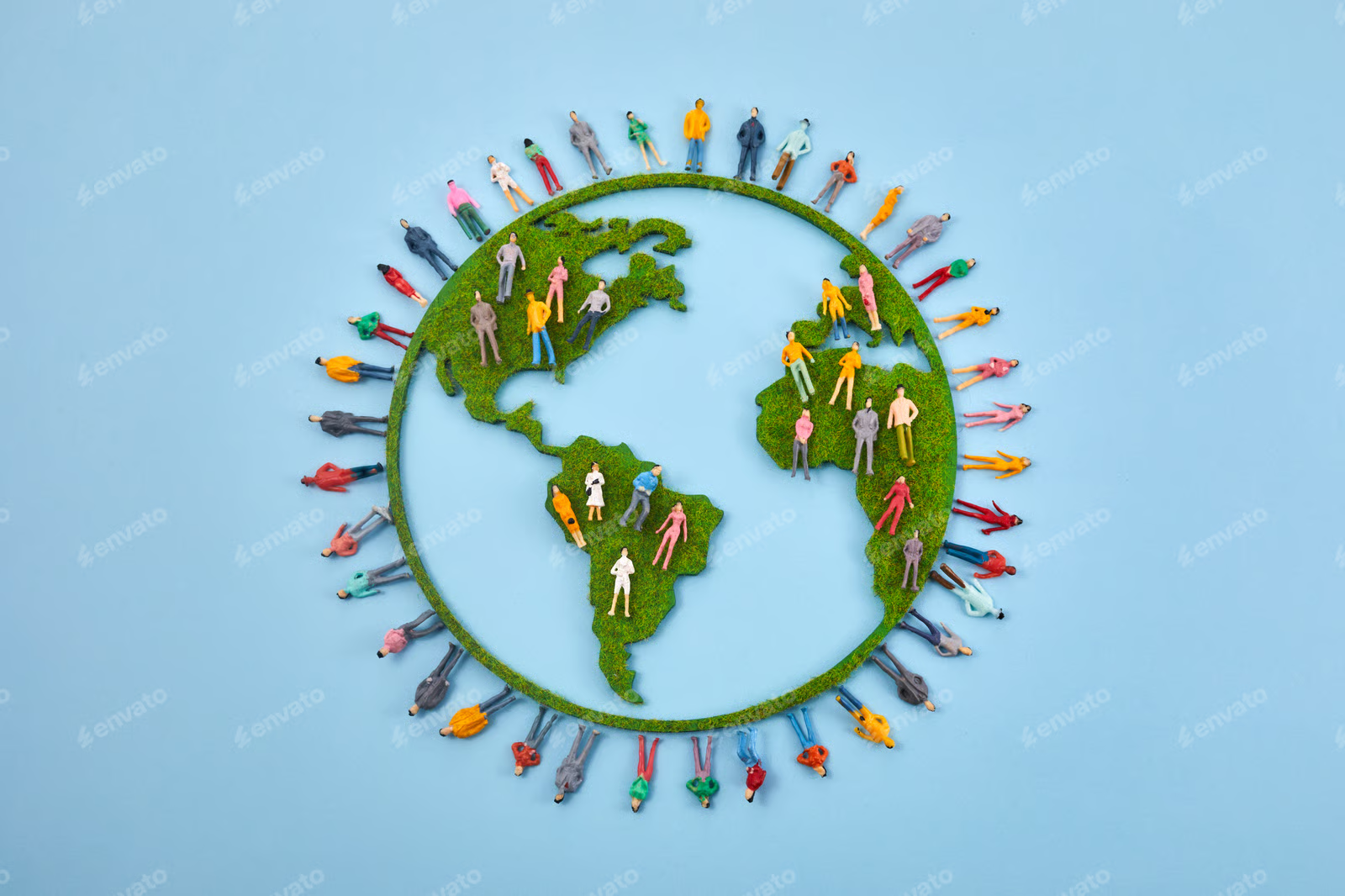
The world produces enough food to feed everyone, yet hundreds of millions go hungry
Each year, more than one billion tons of food—much of it perfectly safe and edible—is discarded. Testing and field studies consistently prove that this food could have nourished those in need.
At the same time, over 828 million people experience chronic hunger or food insecurity. The problem is not lack of food—it’s the policies and liability risks that prevent its flow from surplus to need.
Global laws favor food waste over donation
Across borders, outdated laws, bureaucratic obstacles, and fears of lawsuits make it easier to throw food away than to share it.
- Import and export fees treat donations like trade goods instead of humanitarian relief.
- Border and environmental laws often delay or block shipments of canned, frozen, and cooked food that pose no environmental risk.
- Liability fears deter donors without legal protection.
- Inconsistent labeling laws force companies to discard food that is still safe to eat simply because of arbitrary “best before” language.
The result is a broken chain: food wasted on one end, hunger on the other.
The Human Cost
When edible food is destroyed, children go to bed hungry, families face shortages that could be avoided, and communities lose trust in systems meant to protect them. Food waste also deepens environmental harm—filling landfills, releasing methane, and wasting the energy, water, and labor that created it. The moral, social, and ecological costs are staggering.
World hunger is not unfixable or even costly to solve
If every nation were held accountable to enact the Lazarus Laws, a common-sense legal framework for food donation and legal protection, we could unlock a permanent global pipeline from surplus to need.
Programs like Food Donation Connection, founded by Steve Dietz, already recover millions of meals each year through partnerships with restaurants, grocers, and charities. The Lazarus Council seeks to make that success global—ensuring laws support generosity instead of obstructing it.

Now that you understand the Lazarus Laws, neutrality is no longer an option. Every government, humanitarian organization, and citizen who knows the facts has a moral obligation to act.
We ask every policymaker, every hunger-relief, food-donation, and humanitarian organization, and every citizen of conscience to publicly declare support for the Lazarus Laws and help drive their adoption in your country.
To stay silent is to accept a system where edible food is destroyed while people starve. To take a stand is to help make food donation simple, safe, and universally protected by law.
If you believe that no good food should ever go to waste while anyone goes hungry, click below to add your name, title, or organization—and proudly stand with others supporting the worldwide adoption of the Lazarus Laws.
Now that you understand the Lazarus Laws, neutrality is no longer an option
Every government, humanitarian organization, and citizen who knows the facts has a moral obligation to act.
We ask every policymaker, every hunger-relief, food-donation, and humanitarian organization, and every citizen of conscience to publicly declare support for the Lazarus Laws and help drive their adoption in your country.
To stay silent is to accept a system where edible food is destroyed while people starve. To take a stand is to help make food donation simple, safe, and universally protected by law.
If you believe that no good food should ever go to waste while anyone goes hungry, click below to add your name, title, or organization—and proudly stand with others supporting the worldwide adoption of the Lazarus Laws.